Watershed Matters
Hannah Miller Consulting, LLC
Resource Library


(left) This 'western watersheds' map appears in, The Report on the Lands of the Arid Region of the United States (1879); a scientific report and policy recommendation written by the American explorer, geologist, and anthropologist John Wesley Powell. In the report, he summarizes and critiques the government's land distribution methods as structured under the Homesteads Act.
(wikipedia)
He proposed two new laws that would modify the existing system by enabling cooperative management of water resources. Smithsonian climate data and a decade of Powell's personal observations provided a detailed account of arid western lands and offered critical insight as to the extent and potential of the region's "irrigable lands," "timber lands," and "pasturage lands."
(wikipedia)
Today, as we look around everything is literally on fire in North America. It is helpful to look back at the foundation of how and why something was formed, delineated, defined, distributed, and administered; consider the context of why things have been done in a way to produce the outcomes that we are wrestling with today. Powell noticed something back in those early surveys - the west should be managed by watersheds, not straight political boundaries (state lines). Natural systems do not respond with the kind of volatility we are seeing - out of nowhere. Current landscape conditions are the result of about 150 years of active resource management decisions, human-driven carbon emissions, and natural climate trends.
[Wikipedia contributors. (2026, August 6). Report on the Lands of the Arid Region of the United States. In Wikipedia, The Free Encyclopedia. Retrieved 02:45, August 23, 2026, fromhttps://en.wikipedia.org/w/index.phptitle=Report_on_the_Lands_of_the_Arid_Region_of_the_United_States&oldid=1368000061 ]
(right) Thích Nhat Hanh (1926-2022) was a Vietnamese, Thien Buddhist monk, peace activist, prolific author, poet, and teacher, who founded the Plum Village Tradition, historically recognized as the main inspiration for engaged Buddhism. Known as the "father of mindfulness", his life work continues to have a major influence on Western practices of Buddhism.
(wikipedia)
Mindfulness is the basic human ability to be fully present, aware of where we are and what we are doing, and not overly reactive or overwhelmed by what is happening around us. It means paying attention to the present moment, on purpose, and without judgment.
(wikipedia)
Much like our lands, our human relationships are also on fire. By focusing on improving personal awareness, non-judgement, and presence - we can cultivate more calm in our day-to-day lived experience. We can train our minds to be more focused. We can improve our sleep and overall well-being. This commitment to mindfulness will support our collective resilience in relationships that matter most to us and assist us in becoming better stewards for our life-giving, shared natural resources.
Wikipedia contributors. (2026, July 17). Thích Nhất Hạnh. In Wikipedia, The Free Encyclopedia. Retrieved 02:54, August 23, 2026, from https://en.wikipedia.org/w/index.php?title=Th%C3%ADch_Nh%E1%BA%A5t_H%E1%BA%A1nh&oldid=1364641102
Watershed Resource Library
Both spiritual wisdom and natural science represent vast fields of inquiry when considered independently. Fortunately, you have arrived at a place where decades of professional insight, life experience, and focused study, merge to bridge these two complexworlds.
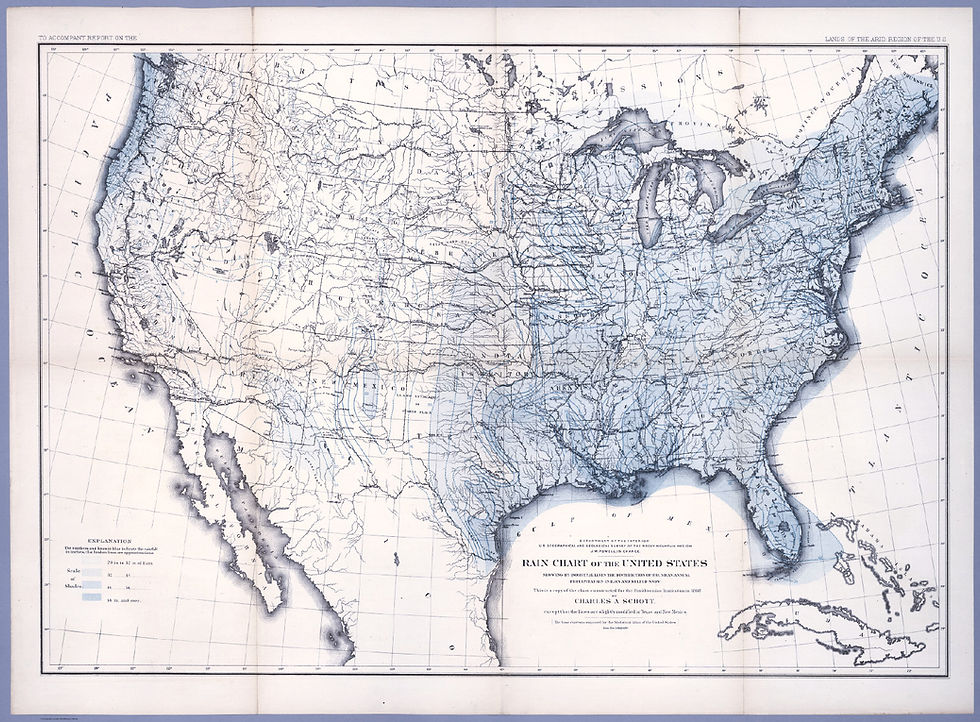

(left) 1879 United States Rain Chart : showing by isohyetal lines and the distribution of the mean annual precipitation in rain and melted snow (1879, John Wesley Powell).
(right) Let the Water Do the Work (2009) by Bill Zeedyk and Van Clothier, is an important riparian and watershed restoration guide and handbook. Harness the regenerative power of floods to reshape stream banks and rebuild floodplains along incised (down cut) stream channels. Induced Meandering pulls on principles of geomorphology, hydrology and ecology – which govern channel-forming processes. Available on the Quivera Coalition website in digital and paperback forms.
Human Consciousness Resource Library
Today, our natural landscapes are on fire and so are our human relationships. Humans are only one element in any ecology, yet impress a weighted influence on the overall ecology. Our natural landscapes are begging for decisions rooted in mindfulness and higher consciousness. The weighted impact of human actions on earth ecologies should summon a greater awareness and a sense of stewardship - as we are not the only beings dependent on this Earth to provide and meet our basic needs. Our world announces new headlines every day that remind us how far departed that we are from operating sustainable ecosystems.
As we search for solutions to our global systems collapse, we look into different parts of our human systems that require attention and care. I feel most of us do want to be better stewards of our lives and operate in more harmony with our ecosystems. Humans possess consciousness, logic, and discernment for a reason. All we can do is begin to build the muscle of mindfullness and work from there.
Here you will find a growing library of resources from a variety of realms of the human experience to help guide you back to yourself and personal alignment. You will find information on topics like: 12-steps and Al-Anon; yoga practice and philosophy; mindfulness and meditation; coping techniques; elevated wisdom-carrying scriptures from various lineages; Non-Violent Communication (NVC) methods; breathing techniques; chakra systems; herbal medicine; nutrition; holistic healing; and much more. I will continue to update the library. Let me know if there are topics you would like to see more about.
